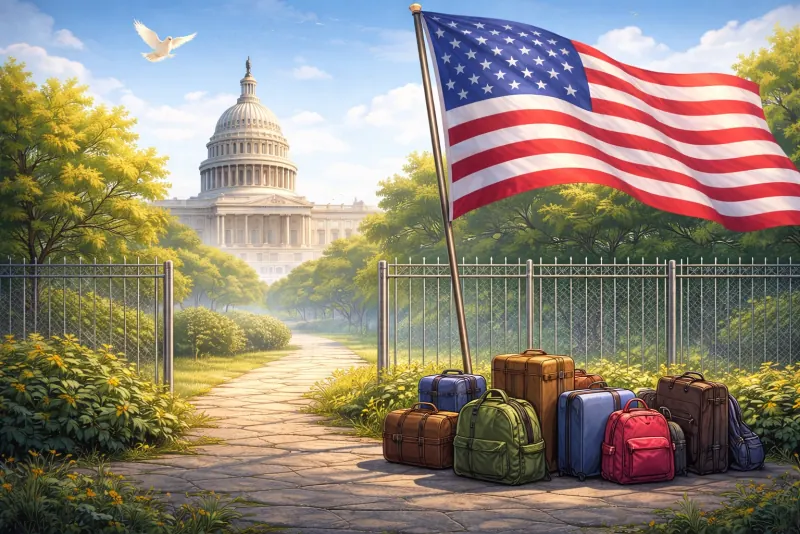
Many families in our community hope to bring a spouse, child, parent or sibling from Ethiopia to the United States. The process is long and document-heavy, and 2026 brought major changes. Here is how it works, step by step.
Who Can You Petition For?
If you are a U.S. citizen, you can petition for your spouse, unmarried children under 21, and parents (if you are at least 21). These are "immediate relatives" and are not subject to annual visa limits. You can also petition for unmarried sons and daughters 21 or older, married sons and daughters, and brothers and sisters (if you are at least 21), but these "preference" categories have annual limits and waits that can last many years.
If you are a lawful permanent resident (green card holder), you can petition for your spouse and unmarried children, including unmarried sons and daughters 21 or older. These are preference categories with waiting times.
Waiting times for preference categories are published each month in the State Department's Visa Bulletin.
Step 1: File Form I-130 With USCIS
The U.S. citizen or permanent resident files Form I-130, Petition for Alien Relative, with proof of their status and proof of the family relationship, such as a marriage or birth certificate.
Step 2: The National Visa Center (NVC)
After USCIS approves the petition, the case moves to the State Department's National Visa Center. There, the family pays fees, submits the online immigrant visa application (Form DS-260), uploads civil documents and submits the sponsor's Affidavit of Support (Form I-864). The sponsor generally must show income of at least 125% of the federal poverty guidelines for their household size, or use assets or a joint sponsor. Once a case is documentarily complete and, for preference categories, the priority date is current, NVC schedules the interview based on embassy capacity; it cannot predict exact dates.
The State Department publishes a reciprocity schedule for Ethiopia that lists which Ethiopian civil documents are required and how to obtain them. Documents not in English need certified translations.
Step 3: Medical Exam and Visa Interview Abroad
Every immigrant visa applicant needs a medical exam by an embassy-approved physician before the interview. Applicants bring their interview letter and DS-260 confirmation page. The State Department's application fee for a family-based immigrant visa is USD 325 per applicant; the Affidavit of Support review fee is separate. Since November 1, 2025, the State Department generally schedules immigrant visa interviews in the applicant's country of residence, or in the country of nationality on request, with limited exceptions.
What Changed in 2026
- Immigrant visa pause, now ended: on January 21, 2026, the State Department paused issuance of immigrant visas to nationals of 75 countries, including Ethiopia. On August 21, 2026 a federal court in New York ruled the policy unlawful and vacated it (CLINIC v. Rubio), and the State Department has stated the pause is no longer in effect. The ruling has been appealed, many affected cases are still being reviewed, and some immigrant visa interviews have reportedly been postponed. Check your case status with NVC and the embassy, and ask an attorney about how later court orders may affect you.
- Ethiopia TPS ended: USCIS lists Temporary Protected Status for Ethiopia as terminated, effective August 18, 2026. Litigation challenging the termination is ongoing, but as of this post no court order blocks it. Former TPS holders should ask an attorney whether a family petition or another option may be available.
Common Mistakes to Avoid
- Inconsistent names or dates across Ethiopian and U.S. documents
- Missing civil documents listed in the reciprocity schedule
- An Affidavit of Support that does not meet the income requirement
- Not responding to NVC: by law, failing to apply within one year of being notified that a visa is available can lead to the registration being terminated
How Gobena & Associates Can Help
We prepare family-based petitions and can explain each step in English, Amharic or Afaan Oromo. Learn more about our immigration services.
Sources
- U.S. Department of State, Fees for visa services
- 8 U.S.C. § 1153, Allocation of immigrant visas
- National Visa Center, Applicant interview
- USCIS, Temporary Protected Status
- NILC, CLINIC v. Rubio: the 75-country visa pause was vacated
The information provided in this blog is for educational purposes only and does not constitute legal advice. Immigration law and policy change frequently; facts are current as of the date of this post. Please consult a qualified immigration attorney about your specific situation.